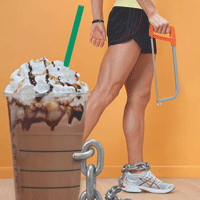
A toned, flat tummy is a goal many of us strive to achieve in time for bathing suit season, but endless crunches and ditching all your favorite foods until July 4th isn’t the right–or fun–way to do it. A sculpted core and trim tummy can be attained by incorporating small changes into your day, like holding in your abs while you walk and adding the right healthy fats to your diet. In our lean belly guide, you’ll get diet and exercise tips that will help you eliminate hard-to-reach ab flab and reveal a sculpted, sexy midsection. Here, learn 25 ways to flatten your belly by summer.

Take Your Gossip Session On A Walk
Instead of catching up with friends over food and drinks, suggest a reunion on the move-you’re likely to work out 104% harder if you have an exercise buddy. Suggest a weekly walk-and-talk session, form a friendly fitness club, or take advantage of gym specials together. You’ll motivate everyone to get moving while you grow even closer.

Deflate Your Muffin Top With The Roll-Up
Hold a resistance band taut between hands and lie on the floor face up, with legs extended and arms overhead. Pull abs in, tuck your chin, lift arms toward the ceiling, and roll head, shoulders, and torso up and over your legs as far as you can. Keep heels firmly on the floor and reach hands towards your feet. Pause, then slowly roll back down. Do 5 to 8 reps with 30 minutes of cardio 5 to 6 times a week.

Make Time For Cardio

If you want to burn the most belly fat, a Duke University study confirms that aerobic exercise is the most effective in burning that deep, visceral belly fat. In fact, aerobic training burns 67% more calories than resistance training or a combination of the two, according to the study. 

Try Out Spidey Moves
Eliminate spillover spots with the Spiderman Climber: Get into plank position with arms and legs extended, hands beneath shoulders, and feet flexed. Keeping your abs tight, bend your left leg out to the side and bring the knee toward the left elbow. Pause, then return to start. Switch sides. Do 20 reps, alternating sides, with 30 minutes of cardio 5 to 6 times a week.

Fight Fat With Fiber
For every 10 grams of fiber you eat daily, your belly will carry almost 4% less fat. Thankfully, there are more enjoyable ways to increase your fiber than scarfing down a box of bran flakes: Two apples, ½ cup of pinto beans, one artichoke, or two cups of broccoli will all give you 10 grams of belly-flattening fiber.

Be Pushy At Restaurants
Saying, “I’ll go last” when the waiter comes around could be adding bulk to your belly. A recent study showed that a normal-weight woman was more likely to mimic a thin woman’s eating habits than an obese woman’s. So when you’re out for girl’s night, order first. You’ll keep yourself, and maybe even a friend or two, on track to a flatter tummy. 

Do the Windshield Wiper.
Lie face up with arms out to your sides, palms down, and legs bent at 90 degrees so feet are off the floor. Keep abs tight and slowly lower legs to the left as far as possible, keeping shoulders on the floor. Pause, then return to start. Repeat to the right. Do 20 reps, alternating sides. 

Clean Your House

One more reason to start your spring-cleaning: Vacuuming is a great ab workout. Tighten your abdominal muscles while you push back and forth for a tighter tummy while you clean.

Cut Back On The Pretzels
Too much salt will make you retain more fluid, which contributes to a puffy appearance and extra water weight.

Fry Fat With The Boat Move
Target your deepest ab muscles with The Boat: Lie face up on a mat with arms straight up over chest. Lift your upper body off the ground by rolling through the spine. At the same time, raise your legs so that you’re balancing on your butt, knees bent and shins parallel to the ground. Slowly roll back down onto the mat, lowering legs. That’s 1 rep. Do 5 reps per set, resting 30 to 60 seconds between sets.

Add This Green Fruit to Your Diet
Just half an avocado contains 10 grams of MUFAs (monounsaturated fatty acids), which halt blood sugar spikes that tell your body to store fat around your belly. Eat these in ¼ cup servings to ward off belly fat without overdoing it. 

Play Catch
Get into a crunch position-lie on your back, knees bent, feet flat on the floor, shoulders and head off the floor with your abs contracted. Then have someone throw an exercise ball (or basketball) to you-first to your left side so you have to twist and reach to catch it, and then to your right. Do this as many times as is comfortable, and try to increase the number each week.

Skip Your Daily Soda Habit
Where do you think all those bubbles from carbonated drinks end up? They gang up in your belly! Swap soda, diet soda, and seltzer for water or water with lemon juice.

(Read More)

Eating healthy can be harder than you think, thanks to an enterprising food industry that wants us to consume more than we need. That’s because our country’s agricultural system produces twice what most people require, according to the U.S. Department of Agriculture’s Economic Research Service. This encourages creative marketing to unload the excess, much of it with minimal nutritional value. As a nutrition consultant, I know that words such as “low fat,” “high fiber,” “multigrain” and “natural” can fool even the most sophisticated customers into believing what they’re buying is healthful. So what can you do? First, make a habit of reading the ingredients list, not just the Nutrition Facts panel. And remember the following products worth resisting.

Reduced-fat peanut butter

All fats are not created equal


The oil is the healthiest part of a nut, containing most of the nutrients, so there’s no advantage to taking it out. In fact, it’s worse because it robs the peanut butter of its health benefits. “Reduced-fat peanut butter has as many calories and more sugar than the regular,” says Bonnie Liebman, nutrition director for the Center for Science in the Public Interest.

Instead: Buy regular peanut butter. Eating one or two ounces of nuts daily is associated with reductions in heart disease and cancer risk. A recent Harvard Study showed that eating nuts is associated with lower body weights.

Enhanced water

Drinks such as Vitaminwater are essentially sugary drinks with a vitamin pill. They are “unequivocally harmful to health,” says Walter Willett, professor of epidemiology and nutrition at Harvard’s School of Public Health. “Whether vitamins dissolved in water have any benefit will depend on who you are and whether you are already getting enough. . . . Some people may be getting too much of some vitamins and minerals if they add vitamin water on top of fortified foods and other supplements.” A recent Iowa Women’s Health Study found an association between certain commonly used vitamin and mineral supplements and increased death rates.

Instead: Drink water, ideally from the tap (“Eau du Potomac,” as it’s known locally). It’s the best drink for hydrating your body, is naturally calorie-free and contains fluoride to prevent tooth decay. No supplement matches the nutrients in whole foods such as fruits, vegetables, nuts and whole grains.

Energy bars

The reputation of these bars, also known as meal replacement bars, is that they are healthy, aid in weight loss or help build muscle. In fact, they are calorie bombs: candy bars with vitamins, protein or fiber added. For most of them, sugar is either the first (predominant) or second ingredient.

Instead: Snack on fruit or veggies for weight loss and yogurt for muscle gain. If you’re hiking a long distance and want a healthful, nonperishable calorie bomb, try nuts and dried fruit.

Multigrain foods

Multigrain breads, crackers and cereals are often the most confusing foods. People see “multigrain” and think “whole grain.” That’s not necessarily so. This is an important distinction because people who eat whole grains have a lower incidence of diabetes, heart disease and cancers, and are less likely to be overweight compared with those who eat refined grains. Note that when “enriched wheat flour” is listed in the ingredients, that’s refined flour.

Instead: Be sure a whole grain, such as whole wheat, whole oats or brown rice, is the first and preferably the only grain in the ingredient list. A great example is a cereal listing whole rolled oats as the only grain. Alternatively, consider an egg for breakfast. “The huge amounts of refined starch and sugar that many people eat for breakfast, often thinking that this is the healthy choice, does far more damage to their well-being than an egg,” says Harvard’s Willett.

Non-fried chips and crackers

It’s easy to believe these foods are healthful because of labels such as “baked,” “low fat” or “gluten free.” But most are made with refined grain or starch, which provide plenty of calories and few nutrients. Popchips, for example, are a new product marketed as healthful. But the ingredients are highly refined potato flakes, starch, oil, salt and about 14 additional things. Pita chips, made with white flour, oil, salt and several more ingredients, are no better. To boot, research shows that too much refined grains and starches increases the risk for heart disease, cancers, diabetes and weight gain.

Instead: Try Wasa or Finn Crisp Original Rye crackers. They’re 100 percent whole grain and have little sodium. If you’d like a chip, try Terra Chips, made with sliced vegetables, or even a 100 percent whole grain chip fried in a healthy oil, such as olive or canola. Tortilla chips and SunChips are two examples. “Now that trans fats have been removed from most cooking oils, the healthiest part of potato chips is the fat,” Willett says. “And chips made of whole grains rather than potatoes, like Frito-Lay’s SunChips, can legitimately be considered a health food,” so long as you keep to the one-ounce serving size.

Tallmadge is a registered dietitian and the author of “Diet Simple” (LifeLine Press, 2011).

(Read Full Article)


By Jessi Stensland For Active.com

Having the ability to run downhill fast does not happen by chance. The same rules of efficient running apply whether you’re on the open road or a rocky trail, uphill or downhill.

In simple terms, when the foot hits the ground with a certain amount of force, the better the body is at scooping that energy back up as the foot leaves the ground and not letting it “leak out”, the more efficient, fast and powerful your running can be.

When running efficiently downhill, gravity is your friend. If the body is unable to handle the momentum, it will be forced to put on the brakes to maintain control down the hill. This means a runner will miss out on the advantage of gravity, and will actually have to use some of their energy to fight the force that could be helping them downhill!

There are a few factors that come into play during efficient downhill running, both on and off-road. It’s not about different mechanics or a different style of running than when on flat ground. Think about it as maintaining proper running mechanics and keeping your legs under you as long as you can at the highest speed you can handle.

In the case of extreme trail running, it is also important not only to have the leg speed, but also the coordination and quick reaction time needed to either utilize and/or avoid obstacles along the way.

To do all of this requires proper running mechanics, key muscles activated, stability through the joints and strong, elastic muscles.

1. Proper Running Mechanics As in all running, the foundation of running efficiently downhill relies upon maintaining tall posture and a strong circular motion of the legs underneath the body. In its simplest terms, this means lifting the knees out in front, foot striking directly beneath the body and then pulling the heel back around to start again.

In general, I see many people running lower-leg dominant instead of from their hips, with minimal knee raise. This alone would greatly reduce the ability to keep up with momentum while running downhill and certainly make it necessary to put on the brakes very early on.

2. Activating the Abs and Glutes In any type of movement, the abdominals and the glutes are important to both force production and overall control of the body. Activating and utilizing them properly within your running mechanics gives the body much greater control over the legs. It also minimizes the impact on the quadriceps and knees that so often take most of the beating during downhill running.

Having that control is pivotal to taking advantage of gravity and keeping control over the momentum, especially while avoiding obstacles when on the trail. Be sure to integrate core strength and stability work along with glute activation exercises in your training.

3. Joint Stability Your ability to maintain stability through your spine, hips, knees and ankles during each step is crucial to controlling you body’s direction and forward speed as you hit the ground. Having strong muscles surrounding the joints is key to creating this stability.

Your joint muscles can be strengthened with single- and double-leg strength and balance exercises that challenge both linear and lateral movements. Especially for extreme trail running, being able to remain stable during quick changes in direction is not only great for preventing injury, but helps with quickness and agility.

(Read More)

 Do You Want to Lose Weight?

Break away from bad eating habits and find new ways to shed pounds for good. By Nicole Falcone Image by Ann E. Cutting Published 11/29/2010

Q: How can I benefit from a session with a regular dietitian, and how do I find a good one? A: A registered dietitian (R.D.) can help you whether you need a few nutritional pointers or you want a complete diet overhaul. To be an R.D. one must have a college degree in dietetics, as well as clinical experience, and must be certified by the American Dietetic Association. Many R.D.s are well versed in sports nutrition, but they often also specialize in such areas as diabetes, weight loss, or heart health.
In one or more sessions with an R.D., you should be provided with eating plans and specific food guidelines tailored to your dietary needs. Some dietitians may even join you in the grocery store to teach you how to shop for optimal health.
To find a dietitian in your area, go to eatright.org. Call a few dietitians and discuss their rates (which can range from $75 to $250 per hour), as well as their views on eating, foods, and supplements. I suggest you avoid dietitians who push supplements over food. Also be wary of “food cops” who exclude food groups or pit good foods against bad foods.

Q: Neither my weight nor my diet nor my running habits have changed for 20 years—but my waist measurement has steadily grown. What gives? A: Even runners who stay in top shape as they age may see their waistlines expand due to declining levels of “youth” hormones, such as growth hormone, which alter where body fat is stored as well as declining muscle mass. While your diet may not have changed much, certain foods can have a bigger impact on weight gain as you age. Keep your belt buckle in the same hole with these strategies:
Pack in produce. Studies show that people who eat ample fruits and vegetables have smaller waists than those who skimp on produce. Researchers theorize a diet rich in fruits and veggies helps curb blood-sugar swings, which can influence the hormones that make fat.
Keep it whole. Eating whole-grain over refined-grain products keeps waistlines trim. Research reveals refined-grain eaters have larger waists, which may be related to a lower fiber intake and its impact on controlling body fat.
Easy on the alcohol. Studies show heavy alcohol consumption leads to fat accumulation around the middle. Women should drink no more than one drink daily, and men should limit themselves to two drinks per day.
Stay fit. Studies show people lose specifically from their waist when exercise is part of their weight-loss program. Upping your mileage or occasionally adding other cross-training workouts may help shave off inches.

Q: What’s the best race distance to train for to lose weight? A: Many runners assume marathon training is the fastest way to lose weight, because all those extra miles add up to lots of burned calories. But the additional miles will also increase appetite, leading some runners to eat too many calories to lose weight.
So rather than running longer, I suggest concentrating on pace. Specifically, try speeding up on one to three of your runs per week (alternating your faster days with easy days). Running faster burns more calories and helps you lose weight in three ways.
(1) You burn about 100 calories for every mile you run. But as intensity increases, so does calorie burning—up to 10 calories per minute per mile. That may sound like a small difference, but it adds up. (2) After a run, you burn additional calories as your body recovers. The harder you run, the more energy you’ll expend post-exercise. One study showed that a high-effort exercise session boosted the “afterburn” by more than double compared with a low-effort session. (3) High-intensity running puts a damper on your appetite. After a longer, slower jog you may well be hungry, while after a hard run, you usually don’t feel like eating. Researchers theorize that a high-intensity effort heats up the body more, which affects temperature-sensitive appetite controls in the central nervous system.
(Continue)


Nearly everyone has the desire to be more healthy. No big secret that one of the principle elements to this is how you eat. Eat better, and you’ll feel better. Feel better, and you’ll be more on top of it. Be more on top of it, and you’ll perform better at work. Perform better at work, and you’ll succeed more. This isn’t rocket science folks…which leads us to the first point….

1) Don’t treat eating better like it’s rocket science. KISS: Keep It Simple Stupid. Stay away from complex diet plans. Eat simple quality. Avoid elaborate calorie counts, carb counts, special meal timings, etc., as all make staying on course difficult.

2) No Franken-foods. Author Michael Pollan put it best with a few simple adages: “Don’t eat anything that your great-great-grandmother wouldn’t recognize as food,” and “Is it food, or is it food-like?” Go deeper with Pollan’s easy guide Food Rules http://michaelpollan.com/books/food-rules/

3) Eat Only Ethical Meat, And Eat Less Of It. Corn-fed beef is like “fine Corinthian leather,” in that it’s an attribute manufactured by an ethically-challenged marketer. Corinthian leather, was a term that was both meaningless and harmless. In the case of corn-fed beef, it is neither. Actual cows were designed by mother nature to eat grass, not corn, and have to be pumped full of antibiotics to keep them alive on such an unnatural corn-based diet. The factory-based system of meat production has countless other challenges. Eat only naturally-raised, grass fed/grass finished beef, and other “ethical meats.”

4) Give up soda. Start today. All soda, including energy drinks. Not just that bad HFCS stuff, but also the stuff that contains the ‘natural’ sugars and sweeteners. Diet stuff too. Quick, before you tell yourself you can’t, resolve to chuck it, and chuck it now. Cold turkey. You are stronger than it, and you know it. So prove it. So, now where to get the caffeine? For some, black coffee is love at first sight. For others, it’s an acquired taste. So acquire it already. Or, go for alternatives that many folks feel are superior for you and the environment, specifically teas, or my preference yerba maté. With any of the above, treat yourself to quality. Don’t sweeten it. In just a few days, you’ll acquire the taste and enjoy it for the rest of your (now longer) life. Do NOT replace your soda with nearly-equally-iffy substitutes like flavored waters, and pre-sweetened bottled coffee/teas/mate.

(Read More)

Common health issues that can be positively affected, prevented or controlled by exercise.

People of all ages can improve the quality of their lives and reduce the risks of developing coronary heart disease, hypertension, some cancers and type 2 diabetes with ongoing participation in moderate physical activity and exercise. Daily exercise will also enhance one’s mental well-being and promote healthy musculoskeletal function throughout life. Although habitual physical activity is an attainable goal on the path to a healthier life, more than half of U.S. adults do not get ≥ 30 minutes of moderate-intensity exercise per day at least 5 days per week (Centers for Disease Control and Prevention [CDC] 2007a).

A formidable challenge facing many personal fitness trainers (PFTs) and other health and fitness professionals is finding new ways of motivating people to improve their well-being through consistent participation in physical activity and exercise. As indicated, significant health benefits can be obtained by engaging in moderate amounts of physical activity on most, and preferably all, days of the week (American College of Sports Medicine [ACSM] 2006). Fitness programs involving progressively increasing intensities of exercise will elicit even greater cardioprotective benefits (Swain & Franklin 2006). There is a growing understanding of how certain levels of physical activity may positively affect cardiovascular, musculoskeletal, respiratory and endocrine function, as well as mental health. This article sums up the evidence on 25 significant benefits linking physical activity to health enhancement. Some of the benefits have been grouped together because of their physiological or metabolic associations.

1. Cardiovascular Disease

The leading health-related cause of mortality for men and women in the U.S. is cardiovascular disease (ACSM 2006). Meaningful cardiovascular health benefits may be attained with long-term participation in cardiovascular exercise. How much exercise is enough? ACSM sought to address that question properly last year when it updated its stance on the recommended quantity and quality of exercise for developing and maintaining cardiorespiratory and muscular fitness, and flexibility, in healthy adults (ACSM 2006) (see the sidebar “New 2006 ACSM Position Stand on General Exercise Programming” below). Higher levels of cardiovascular fitness are associated with a 50% reduction in CVD risk in men (Myers et al. 2004). Myers and colleagues demonstrated that increasing physical activity to a total of at least 1,000 kilocalories per week is associated with a 20% reduction of mortality in men. Hu and colleagues (2004) showed that physically inactive middle-aged women (engaging in less than 1 hour of exercise per week) doubled their risk of mortality from CVD compared with their physically active female counterparts. It should be emphasized that Haskell (2003) notes that CVD is a multifactor process and that “not smoking, being physically active, eating a heart-healthy diet, staying reasonably lean and avoiding stress and depression are the major components of an effective CVD prevention program.”

2–4. Diabetes, Insulin Sensitivity and Glucose Metabolism

Diabetes has reached endemic proportions, affecting 170 million individuals worldwide (Stumvoll, Goldstein & van Haeften 2005). One unfortunate health consequence of physical inactivity is the weakening of the body’s insulin regulatory mechanisms. Elevated insulin and blood glucose levels are characteristic features involved in the development of non-insulin-dependent diabetes mellitus. When insulin function starts breaking down, the body’s blood sugar levels rise, leading eventually to the onset of “prediabetes” and then type 2 diabetes. Diabetes incidence is growing among youth and adults, largely as a result of obesity and inactivity. Regular aerobic exercise meaningfully increases insulin sensitivity and glucose metabolism, which means the body’s cells can more efficiently transport glucose into the cells of the liver, muscle and adipose tissue (Steyn et al. 2004). Improvements in glucose metabolism with strength training, independent of alterations in aerobic capacity or percent body fat, have also been shown (Pollock et al. 2001). Although the mechanisms for improvement are not fully understood, it appears that both resistance training and aerobic exercise offer a strong protective role in the prevention of non-insulin-dependent diabetes mellitus.

(Continue)

Committing to living well does cost more money than swooping through the drive-thru for a $1 burger. Nevertheless, when it comes to improving your health, shelling out extra money is worth the long-term benefits–unless you’re paying for healthy benefits that you’re not actually getting. Here are some healthy moves, that while well-intentioned, might be a waste of your money.

Buying Foods Labeled Antibiotic-free

According to the site Greener Choices, the food label “antibiotic-free” is completely meaningless. In fact, the USDA has banned its use on meat and poultry products. While similar labels with terms such as, “no antibiotics administered” or “raised without antibiotics” are allowed, there is no USDA verification system in place to ensure that the claim is valid. A better bet for your budget is to stick to meats labeled as “Certified Organic.” You may pay more for these foods, but producers go through a stringent process to earn the right to use the label.

Splurging on 100% Vegetarian

According to the Institute of Food Technologists (IFT), “flexitarians” (consumers who are have not completely resolved to a vegetarian lifestyle, but make an effort to reduce their consumption of animal derived products) make up a quickly growing consumer group.  To target this demographic, mass-market producers such as Kraft, General Mills and ConAgra foods have launched their own vegetarian lines that carry a label indicating as such.

The problem? Vegetarian lifestyles come in many forms: Some avoid meat, fish and poultry, but eat dairy and egg products. Others avoid all animal products, including honey. Furthermore, there is no governing body that regulates the “vegetarian” claim. Unless you buy products labeled “Certified Vegan,” which are verified by Vegan Action (a company that certifies vegan products based on documentation from manufacturers), the “vegetarian” label can mean any number of things.

(Continue)

Aside  —  Posted: November 27, 2011 in Fitness, Health, Money, Nutrition
Tags: , , , ,

This piece first appeared in the September issue of Competitor Magazine.

If you’re only focused on race-day nutrition, you’re missing the big picture, says Littleton, Colo.-based Bob Seebohar, the personal sport dietitian for the 2008 Olympic Triathlon Team and author of “Nutrition Periodization for Athletes: Taking Traditional Sports Nutrition to the Next Level.”

“You have specific physiological goals associated with each training cycle, such as increasing endurance, speed, strength and power, and improving technique, tactics and economy,” Seebohar said. “You should have specific nutrition goals as well.”

Those goals might include losing or gaining weight, losing body fat and increasing lean muscle mass, reducing inflammation and improving overall health. To achieve your goals, Seebohar recommends periodizing your nutrition plan just as you would your training.

“Look at your nutrition as a function of your energy expenditure and physical goals associated with each training cycle to guide your nutritional choices,” Seebohar said.

Seebohar shares five tips for fueling during your competitive season, when you have the highest energy expenditure needs.

(Continue)

Foam Rolling – The Basics

By Nicole Drummer

As a coach, I encourage all my athletes to utilize a foam roller in their training — the recovery part of training. Many of you have probably heard of foam rolling and have certainly seen these dense foam cylinders in your favorite running or cycling store, and perhaps also at the gym. This article will take a quick look at the purpose of foam rolling and how a triathlete can use it to aid in recovery. Let’s start with the basics:

What is a foam roller?
A foam roller is a foam cylinder, approximately 6 inches in diameter. They vary in length and density. They can be purchased online or at running/cycling/tri or other sport specialty stores.

Why do you want to foam roll?
Getting a regular massage is something a lot of us know we should do, but don’t. Foam rolling is an inexpensive way to provide self massage. It’s not as good as a “hands-on” massage from a  licensed massage therapist, but proper utilization of a foam roller to break up adhesions in the muscle tissue and/or fascia can help you recover faster and keep your muscles ready to train. In layman’s terms, breaking up the adhesions in the soft tissue aids in decreasing trigger points from forming and brings blood flow to the area. Increased blood flow will bring nutrients and assist in repairing damaged muscle that your last workout may have caused.

How do you foam roll?
There are several methods to foam rolling – you can find a trigger point (tight, painful spot) and just apply pressure there, or you can roll along the muscle (like the sweeping strokes of a massage therapist). You can also do a combination of the above. One thing to note — don’t foam roll joints or injured tissue.

How often should you foam roll?
Athletes training 5-6 times a week can probably foam roll daily, and right after a workout if possible. If you can spend 15-20 minutes foam rolling and 10-15 minutes stretching before bed, you’ll probably sleep better, feel better and recover faster, which means your next workout will be more effective. Note: foam rolling might be painful on chronic tight spots, but listen to your body as it shouldn’t feel like injury pain. If it does, go see a physical therapist!

Now that the basics are covered, here are some major muscle groups triathletes should consider foam rolling:


Glutes: One of the largest muscle groups and a primary driver in our sport, having a healthy gluteus maximus, minimums, medius is important.

This position helps isolate the piriformis.


IT Band: While Illiotibial band (a thick section of fascia from the hip to knee) issues usually stem from a muscle imbalance somewhere, keeping the ITB and the muscles around it loose is quite helpful to our running and cycling performance.


(Continued)


You’d love to have a flat belly for the party tonight, but thanks to one too many sodas or that basket of tortilla chips, zipping your pants is a real struggle. Abdominal bloating not only looks bad, but can cause physical discomfort. The good news? Experts say stomach bloating is a condition you can avoid pretty easily.

We’re not talking about extra pounds of stomach fat here, but the temporary abdominal distention that plagues most everyone from time to time. Unless your stomach bloating is because of a medical condition, such as liver or heart disease, the only real cause is intestinal gas – not “water weight,” says Michael Jensen, MD, an endocrinologist and obesity researcher at Mayo Clinic.

 “It is a myth that bloating in the stomach is from fluid accumulation in healthy adults, because the abdomen is not a place where fluids accumulate first,” Jensen says. “Instead, you would see it in your feet or ankles as long as you are upright.”

So what causes gas to accumulate and wreak havoc on how you feel and look? Experts say there are several causes, from food intolerances to constipation.

Flat Belly Tip No. 1: Avoid Constipation.

Too little fiber, fluids, and physical activity can lead to constipation, which can result in bloating, Jensen says.

To avoid this, eat a diet high in fiber (25 daily grams for women and 38 for men) from whole grains, fruits, vegetables, legumes, nuts, and seeds. Also, drink plenty of fluids (aim for 6-8 glasses a day) and aim for physical activity for at least 30 minutes, five times a week.

If you’re eating a low-fiber diet, gradually bump up the fiber level, making sure you also drink plenty of fluids for better tolerance.

Flat Belly Tip No. 2: Rule Out Wheat Allergies or Lactose Intolerance.

Food allergies and intolerances can cause gas and bloating, but these need to be confirmed by your doctor. Many people self-diagnose these conditions and unnecessarily eliminate healthy dairy and whole grains from their diets. If you suspect you have an allergy or intolerance, see your doctor for tests.

You may benefit from reducing the amount of the suspected food and/or eating it with other foods. In the case of dairy, it can help to choose aged cheeses and yogurts, which are lower in lactose.

Flat Belly Tip No. 3: Don’t Eat Too Fast.

Eating quickly and not chewing your food well can cause air swallowing that leads to bloating, says Dawn Jackson Blatner, RD, author of The Flexitarian Diet.

So slow down and enjoy your food. Your meals should last at least 30 minutes. Also, keep in mind that digestion begins in the mouth, and you can decrease bloating just by chewing your food more, Blatner says.

There’s another benefit to slowing things down: When you take your time to thoroughly chew and taste your food, your snack or meal becomes more satisfying. And studies have shown that if you eat more slowly, you may end up eating less.

Read more >